
After widely-reported killings of civilians Renée Good and Alex Pretti in Minneapolis by federal immigration agents (ICE) the scale of the violence of US immigration enforcement, turbo-charged under the current Trump presidency, has become harder to overlook from the UK. The number of people held in the US immigration detention facilities reached 68,400 as of 14 December 2025, – a record high. At Right to Remain, we have been keeping track of the developments across the pond. Just as solidarity knows no borders, so do the harmful narrative and techniques used to control, hunt and punish migrants travel freely.
Hunting down undocumented migrants takes place in the UK too: we have our own ICE – Immigration Compliance and Enforcement teams. These teams carry out immigration checks, home visits, workplace raids, and other enforcement activities. The Home Office calls them “enforcement visits” but we call them raids to reflect the lived reality of how cruelly raids intimidate, disrupt and destabilise our communities. Under the Labour government, ICE y have become far more active. According to the Home Office, ‘Between 1 July 2024 and 31 December 2025 Immigration Enforcement teams made more than 12,322 arrests of people in illegal working visits, an 83% increase on the same period immediately 18 months prior’.
It is entirely reasonable and normal to feel anxious about what this escalation could mean for us here in the UK. As the UK moves deeper into the election cycle (local elections coming up in May this year and the next General Election must take place before July 2029), migration continues to be framed as a threat, and the direction of travel is still punishment and criminalisation of migrant communities. We can’t predict exactly what policies will follow, but we can be honest about the trajectory of the debate and we can prepare accordingly.
We write this blog because more and more people appear to be feeling that they want to ‘do something’ for the migration justice movement and anti-racism in the UK: there are many social media posts on this with multiple demos and marches announced to denounce the killings of Renée Good and Alex Pretti in Minneapolis. We would like you to know that solidarity is a verb. We would like to see these activities boost the migration justice movement, delivering a tangible positive change in the everyday lives of the very people who are targeted by the Hostile Environment.
When Right to Remain was known as the National Coalition of Anti-Deportation Campaigns, the concept of solidarity was alien to many people. People could understand charity – afterall, the Victorian idea of ‘those who are fortunate enough serve the poor’ has very much shaped the UK’s charity sector. But solidarity, that is premised upon the idea of treating others as our equals regardless of their circumstances, was not a very popular or oft-invoked concept.
Fast forward to 2026 and we see the word ‘solidarity’ everywhere. It is hard to pinpoint exactly why solidarity has become so fashionable. Our guess is that the Black Lives Matter movement combined with the COVID pandemic and high-profile counter actions against racist raids and immigration enforcement have contributed to this popularity. It is encouraging to see the image of the immigration enforcement van surrounded by hundreds of people in Kenmure Street in Glasgow in May 2021 circulated so frequently across social media, as something for us to aspire to.
Right to Remain thinks that while it is easy to say solidarity, it is much harder to do solidarity. Doing solidarity can make people feel uncomfortable and vulnerable. It can be messy and requires a lot of effort to sustain and grow. Our preferred terminology is ‘radical solidarity’. The kind of solidarity that stretches far beyond familiarity – beyond people who look like us, live like us or share our identity. Radical Solidarity asks us to show up for people we don’t yet know, and to practise courage in small, everyday ways. How many of us have courage to even speak to people that we do not know very well – let alone stand besides them when the stakes are so high?
Below is an inconclusive and rudimentary list of tips that we hope will help more people do solidarity and step up. These suggestions come from Right to Remain’s reflection of trying to do solidarity and the allyship that These Walls Must Fall (our network of lived-experience leaders who are campaigning and organising for migration justice) have experienced. We have a lot more to say on this topic – but this is a start.
- Find and connect with like-minded local groups and people. It’s easier, if not impossible, to do this alone. People exist in neighbourhoods, not in a social media bubble or campaign emails. You might not find a group specialising in asylum or migration or an anti-raids group locally – but are there other inclusive groups who are also supporting people seeking asylum and migrants? (Examples: women’s support groups, anti-racist groups, foodbanks, sports clubs etc.) Find out what they do and see if you can join and lend your hand. If you are already part of a group but not familiar with refugee or migration issues, why not invite local refugee or migrant groups to come and talk to you, and share their experiences?
- Build trust, while being aware of power dynamics. Solidarity is a verb, and it is about doing things and acting together. It can be hard to act together in spaces that lack trust. (This was one of our learnings from our recent Free Fatou anti-deportation campaign.) It can also be hard to act together, in an equitable way, when we have different levels of privileges. Try to speak to people, get to know them. Needless to say, what we do needs to centre people with lived experience of the Hostile Environment. They need to sense that trust in space before they can open up. We know this can feel uncomfortable and needs practice. For example, whenever we run in-person workshops, we ask people to sit next to people that they don’t know so that they can get to know new people – and so many people find it too difficult to do this! The best way to learn how to do this is by doing it.
- Pool knowledge, skills and resources. Every situation that calls for solidarity is different – it can be alarming and complex or it might seem mundane. No one, not even us at Right to Remain, knows all the answers to everything or has all the skills. For example, people with lived experience might need people with secure immigration status to be at the front when they might find themselves in a vulnerable position. Not everything is a high-stake action: gentle, unremarked, everyday activity to fight against the Hostile Environment is also solidarity in action, such as using our Toolkit with others to help people navigate the Kafquareque labyrinth of the UK asylum and immigration system. We can share our knowledge and skills so that we can act collectively – and when there is trust, it is much easier to collaborate too. Also shared knowledge helps us act quickly – this was one of the learnings from our recent Free Fatou anti-deportation campaign. Because many who were involved in the campaign attended Right to Remain workshops on reporting and detention, as a group, we were able to make decisions and act quickly.
- Show up, reflect and learn together. Solidarity is not a talking shop, and those of us who can need to show up physically and materially for each other. This seems like such a simple thing, but sometimes people confuse social media “likes” with showing up. This is a long-term struggle. Some people leave and new people join. To keep the momentum going, we need to intentionally reflect and learn from each other and from each action. Hold debriefings, discussions and meetings, with generosity and openness. These practices make us stronger in the long-run. For example, These Walls Must Fall’s strength comes from their iterative reflection and learning process which develops its campaigners’ leadership skills.
- Look after each other. Solidarity is complex. Solidarity needs a lot of effort. Solidarity can be draining. It’s because solidarity often requires us to be brave, taking actions that might not feel familiar. Burn-out is very common. Take time to look after yourself and look after each other – the best way to look after each other is to share tasks, so that no one person is burdened with all the responsibilities to keep things going.
With the rise of the far right activities here and elsewhere and the spectre of state violence and resistance in the USA played out in the mainstream media, we know that we are in the ‘movement moment’ right now. We want to see tangible solidarity growing beyond social media posts, marches and demos. We need to make sure that there is a tangible positive difference for the people at the sharp end of the Hostile Environment, after all these activities. In fact, we desperately need it.
Every crisis our community has experienced – from the Rwanda deportation panic in 2024 to our #FreeFatou campaign when one of us was detained – has proved shared knowledge and trust are essential ingredients to be able to ‘meet the moment’. Courage and action do not come from a vacuum – they arise from everyday solidarity that affirms and bolsters our agency. Everyday solidarity grows from connections and relationships.
Audre Lorde said: “You become strong by doing the things you need to be strong for. This is the way genuine learning takes place.” This has been our experience. It will be yours too.
Stay safe and keep going. Solidarity is a verb.
Right to Remain team

PS Don’t forget…
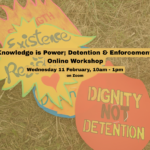
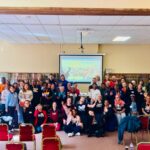
For the next Knowledge is Power session, we are accepting applications from people who are part of existing groups, to ensure that information will be put to use on the ground.










Discussion: