

In case you haven’t heard already, the Home Office is pursuing plans to create an additional 1,000 detention spaces by expanding the detention centres at Campsfield and Haslar. This would expand the size of the detention estate by around 40%, increasing the number of people who can be detained with no fixed statutory time limit, causing even more harm to both people taken from their communities and by those left dealing with the impact of detention. It also means lining the pockets of the private companies who profit from running detention centres, while further expanding the government’s racist immigration enforcement agenda.
We previously wrote an update about the decision to take the Campsfield application to a public inquiry. On 9 September 2026, the Crown Development Applications team confirmed that Haslar will also have its own public inquiry.
Since the Campsfield inquiry was announced, we have been trying to understand the rules, looking at the previous Crown Development Application inquiry held last year, and speaking with different legal practitioners (thank you!) to understand what happens next, how the inquiry process works, and what opportunities there are for us and others to take part.
An overview of what has happened so far
The Home Office has made applications to expand two immigration detention centres: Campsfield IRC in Oxfordshire and Haslar IRC in Gosport. These applications have been made through a relatively new planning process called the Crown Development Route.
- Campsfield reopened in December 2025 with 160 detention spaces. The Home Office wants to add another 240, increasing its total capacity to 400.
- Haslar has not yet reopened. The Home Office plans to reopen it in 2027 with around 130 spaces, and is now seeking permission to add another 470, increasing its total capacity to around 600.
Usually, major developments need planning permission from the local council. The Crown Development Route works differently: government departments can apply through the national planning system for developments they say are of national importance. Local councils and communities can still object, but they do not make the final decision.
The Planning Inspectorate is the government body that deals with these applications. It appoints a Planning Inspector to oversee the process, hear the evidence and make the decision.
Both applications went through a public consultation. The Planning Inspectorate received:
- 260 representations on Campsfield
- 490 representations on Haslar
Both applications will now go to a public inquiry, where the Planning Inspector will hear and test the evidence for and against the plans before making a decision.
- The Campsfield inquiry starts on 6 October 2026
- The Haslar inquiry starts on 17 November 2026
How can you take part in the public inquiries?
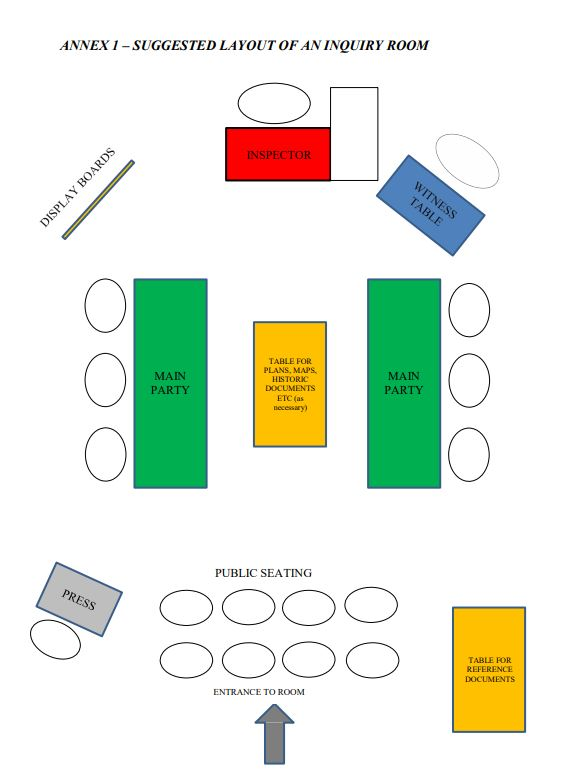
A public inquiry is a formal process where a Planning Inspector hears and tests the evidence for and against the plans. It usually takes place in a hearing room which is located in or close to the area affected by the development. The room is set up with tables with the Inspector at the front, the Home Office and council presenting their cases, witnesses giving evidence, and members of the public sitting behind to watch and take part if they have registered to speak. The Inspector can ask questions throughout the inquiry. No decision is given on the day but once the inquiry has finished, the Inspector will look at all the evidence and then write a formal decision explaining whether planning permission is granted or refused and why. There is no set timetable for when a decision has to be published, but at the previous Crown Development inquiry for the Sevington Inland Border Facility, the hearing opened on 2 December 2025 and the decision was published on 17 December 2025, around two weeks later.
For people familiar with the immigration and asylum tribunal, the room and the way evidence is heard may feel quite similar, although a planning inquiry is a different process and is not a court case.
Both the Campsfield and Haslar inquiries will be open to the public. You can attend simply to listen, or you can ask to speak as an interested party. This means speaking directly to the Inspector about your concerns without taking on a formal role in the inquiry.
For Campsfield, the Planning Inspector has already published detailed instructions. If you want to speak, you need to contact the Crown Development Applications Team at crownapplications@planninginspectorate.gov.uk by midday on Friday 2 October 2026.
We do not yet have a deadline for people who want to speak at the Haslar inquiry, but we will update this article when more information is published.
For Campsfield, interested parties should plan to speak for around three minutes each, although the Inspector can allow more time. If several people or organisations want to make similar points, they can choose one spokesperson, who may be given longer to speak.
As we understand the guidance, you do not have to have submitted an objection during the original consultation in order to ask to speak. If you did submit an objection, the Inspector has already read it, so there is no need to repeat everything you wrote. Instead, you can use your time to highlight your strongest points, share relevant evidence or experience, or explain why something matters.
We do not yet know whether people will be able to speak remotely at Campsfield or Haslar. Planning Inspectorate inquiries can sometimes include online participation, so we will update this article when the arrangements are confirmed.
For Campsfield, the Inspector has already identified the main issues the inquiry will examine. These include local planning issues such as traffic, infrastructure and the impact on the surrounding area, but importantly also:
- whether the Home Office has actually shown a need for more detention spaces; and
- the impact on people detained at Campsfield, including mental health, humanitarian harms and human rights.
We expect the Inspector for Haslar to publish similar information setting out how people can take part and which issues the inquiry will focus on. We particularly want to see the Haslar inquiry examine the claimed need for hundreds more detention spaces and the impact of detention on the people held inside.
You do not need to be a planning expert to have something important to contribute. People with lived experience of detention, families and communities affected by detention, local residents, campaign groups and organisations may all have relevant evidence and experience that the Inspector should hear.
Taking a more formal role in public inquiries
Some organisations may decide to apply for a more formal role called Rule 13 status. In simple terms, this means taking a bigger part in the inquiry by presenting detailed evidence and being able to question the evidence put forward by the Home Office and others.
Because the Crown Development Route is new, there is not much detailed guidance yet on what it means to take part under Rule 13. The Planning Inspectorate, the government body running the inquiry, says the process is broadly similar to Rule 6, which is used in some other types of planning inquiry. Rule 6 allows community groups and others to take a formal role rather than only speaking as an interested party.
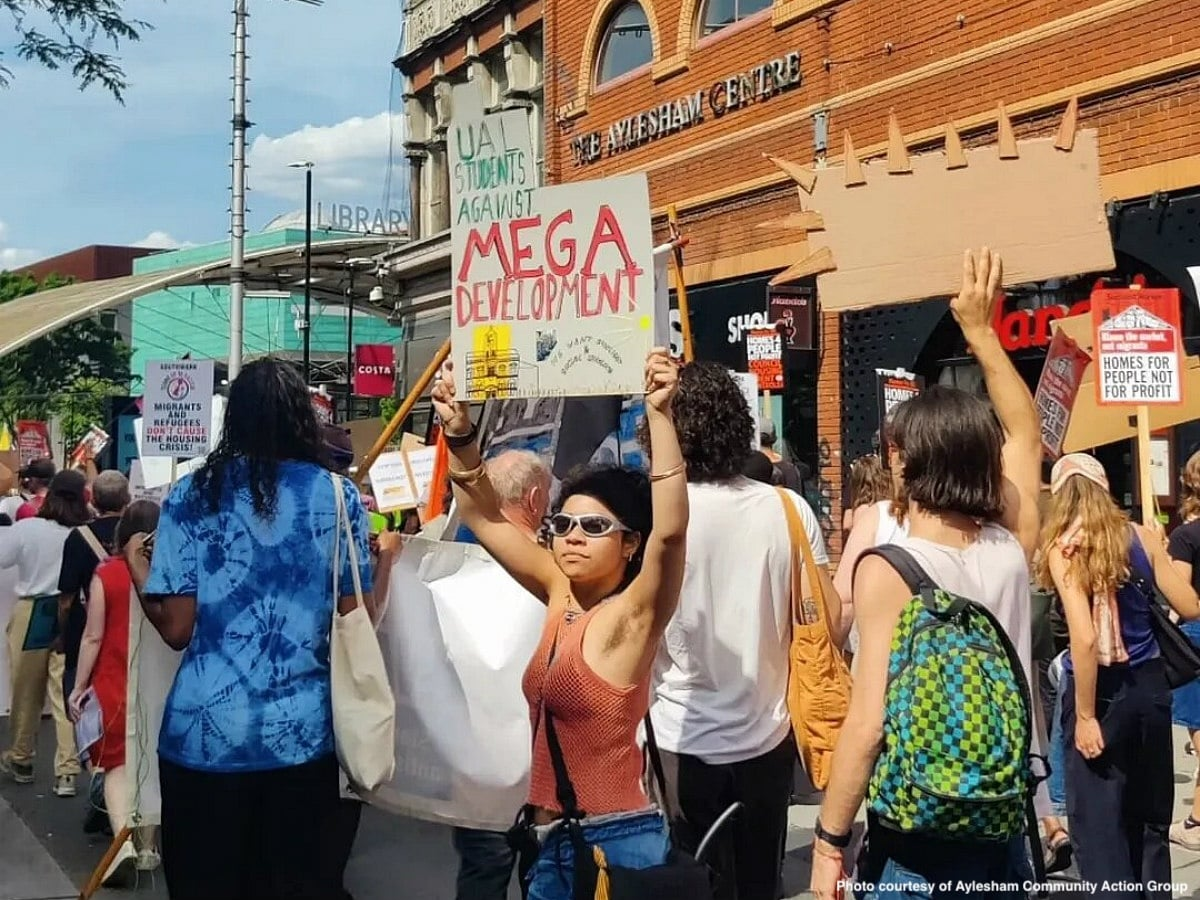
The rules are not exactly the same, but there is plenty we can learn from communities that have taken part in inquiries as Rule 6 parties. One inspiring example is Aylesham Community Action in Peckham, which became a Rule 6 party when Berkeley Homes appealed over plans to redevelop the Aylesham Centre. The group raised money for legal support, brought its own evidence and expert witnesses, and was able to put forward the community’s arguments independently from the council. Following the public inquiry, the Planning Inspector dismissed Berkeley Homes’ appeal and refused planning permission.
Taking on Rule 13 status is a much bigger commitment. It can involve preparing detailed evidence, finding witnesses and getting legal or planning support. For community groups, this can be a significant barrier, particularly because legal and professional costs can run into tens of thousands of pounds.
Community Planning Alliance has a useful webinar for community groups taking part in planning inquiries. The most relevant sections explain how inquiries work, what effective participation looks like, and what to consider before applying for Rule 6 status. Watch the webinar here
If the public inquiry is not for you
You do not have to take part in a public inquiry to challenge detention expansion.
You can get involved in the National Week of Solidarity to End Immigration Detention, running from the 16 – 25 October 2026, organise locally, learn more about immigration enforcement and detention, and talk about what is happening with the people and organisations around you.
Most importantly, you can help put detention back on the agenda. The expansion of the detention estate is not a side issue. It is part of a wider system of immigration enforcement that affects people across our communities, and it needs sustained attention, organising and opposition.











Discussion: