
by Maggy Moyo
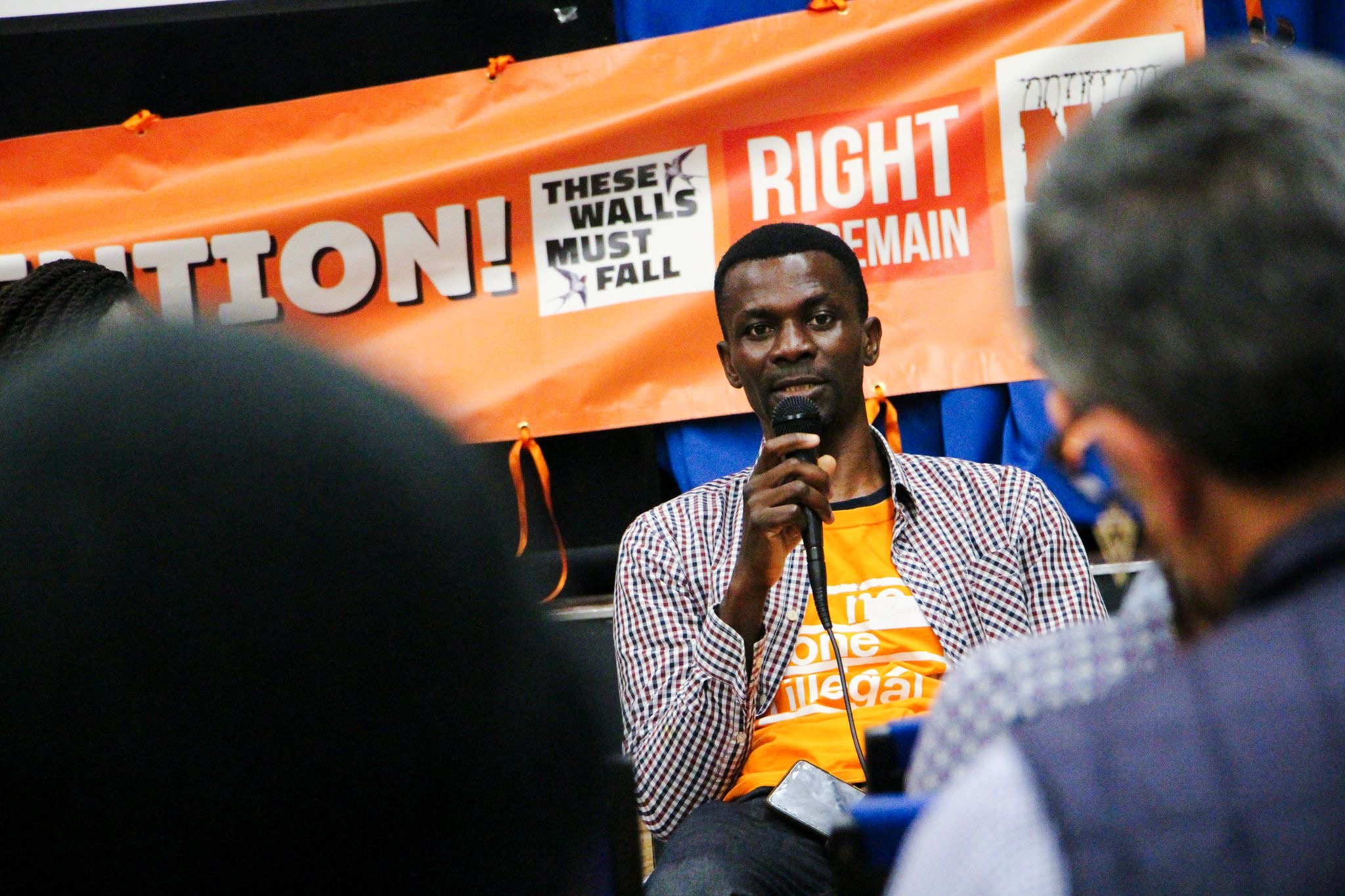
I watched Joseph stand in front of Home Office representatives and speak with anger, strength, honesty and deep conviction about everything he had endured under an unfair and hostile system. But he also spoke as someone who now knew he was not alone anymore.
As we join many others celebrating Refugee Week with its theme of Courage, we wanted to share the story of one of our members whose journey reminds us what community, solidarity and simple acts of kindness can truly mean during moments of crisis.
We met Joseph at Dallas Court Reporting Centre during the height of the Rwanda crisis in early May 2024.
As usual, our members had organised a small coffee stall outside the reporting centre with tea, coffee, snacks and fruit. Over time, these stalls have become more than refreshments. They have become spaces of warmth, safety and solidarity where people reporting can approach us without fear, ask questions, access support information and simply feel human again during an often frightening experience.
Because of the increasing fear around the Rwanda deportation plans, our members had also reached out to close allies and community organisations for additional support that day, and many people came to stand with us in solidarity.
As people entered and exited the reporting centre, we distributed leaflets with information about local support organisations, legal resources and community groups that could support people through the isolation and anxiety of reporting conditions.
That was the day we met Joseph.
One of our members first spoke with him before calling me over because he was visibly distressed. I gently took him to one side to speak privately and asked what was wrong.
Coming from an African background myself, I know how deeply many men are taught to hide pain and never cry publicly. So seeing this man standing there in tears immediately broke my heart.
At first, he could barely speak. He simply opened his mouth and cried with a kind of pain that sat heavily in the air around him. I knew at that moment that he did not only need information or advice. He needed someone to stand beside him.
Eventually, after calming himself slightly, he asked if I could help him to go back to his home country as he felt that he was being mentally tortured. Joseph explained that he had come to the UK fearing persecution and danger in his home country, but that the treatment he was now experiencing here felt like another form of punishment and persecution.
He showed me the GPS electronic tag attached to his ankle and explained how humiliating and psychologically damaging it had been. He had never committed a crime, yet he was being monitored, stigmatised and forced to attend face-to-face reporting appointments as though he was dangerous. What affected him most was not only the physical tag itself, but what it represented. The feeling of being criminalised simply for seeking safety.
We reassured Joseph that there were organisations and communities willing to stand beside him. I remember saying to him, “All these people you see here today, this is now your family too. We will walk this journey with you.”
Slowly, his breathing settled. He wiped his tears, joined the others again, had a cup of tea, and began speaking to people around him. By the end of that morning, he had already made connections and found a community. We stayed in touch with Joseph after that day.
That same week, as fear around the Rwanda plans intensified nationally, we organised a solidarity march through Manchester to show people seeking asylum and migrants that they were not alone.
We called on allies, communities and organisations to stand with people living in fear and uncertainty because of the hostile environment and deportation threats. More than 300 people joined the march.
Joseph stood there surrounded by hundreds of people chanting in solidarity with migrants and refugees, and I could see the disbelief in his face. He kept quietly saying to members, “It’s not everyone that hates migrants. The news and social media makes it feel like the whole world is against us.” That day mattered deeply to him.
We marched from St Peter’s Square to Piccadilly Gardens, passing the Tribunal buildings and calling out the hostile racism and injustice many migrants experience within those systems.
But something shifted in Joseph after witnessing that level of public solidarity and care. The man we had first met in tears slowly became one of the bravest campaigners we have ever worked alongside. Quiet and soft in approach when you first meet him, but fearless once he begins to speak.
Joseph began publicly challenging electronic tagging policies and speaking about the psychological harm they cause,the shame, the isolation, the constant need to explain yourself, the way people immediately assume criminality when they see a tag around your ankle.
I still remember in one of the solidarity sessions we held in Liverpool where he shared his story with humour and honesty. He jokingly said:
“I am very dark in complexion, I like keeping my Afro hair, and at times I could not afford nice clothes. So being labelled a criminal almost suited the stereotype people already had of me. The electronic tag completed the picture.”
The room fell silent. But what stood out most was not only his honesty. It was the confidence he had slowly rebuilt through solidarity, community support and organising. His courage grew. His passion to fight for others grew.
Over the past year, Joseph travelled with us to speak at events and protests across Newcastle, Durham, Sheffield, Liverpool and Manchester. Ironically, his final “speaking engagement” ended up being at the Tribunal Court itself, where I accompanied him for his hearing.
That day, I witnessed a fighter. I watched Joseph stand in front of Home Office representatives and speak with anger, strength, honesty and deep conviction about everything he had endured under an unfair and hostile system. But he also spoke as someone who now knew he was not alone anymore. There was strength in him that day, but also the weight of every reporting appointment, every moment of humiliation, every sleepless night and every fear he had carried since arriving in this country.
Knowing what he had survived, and seeing the confidence and resilience he had built through community, left many of us emotional.
And finally, Joseph was granted refugee status.
Looking back now, I often think about how easily this story could have ended differently. If our members had not been outside Dallas Court that morning, if nobody had approached him and if no solidarity had existed during that period of fear and crisis. For some people, isolation and hopelessness become too heavy to carry. We have sadly seen cases where people lose hope entirely and choose dangerous paths simply to escape the mental exhaustion of the system.
Joseph’s story reminds us why small acts matter. Because sometimes one act of kindness and one person’s courage changes the direction of an entire life.
Be part of change, take part in this year’s Refugee Week.



Discussion: