
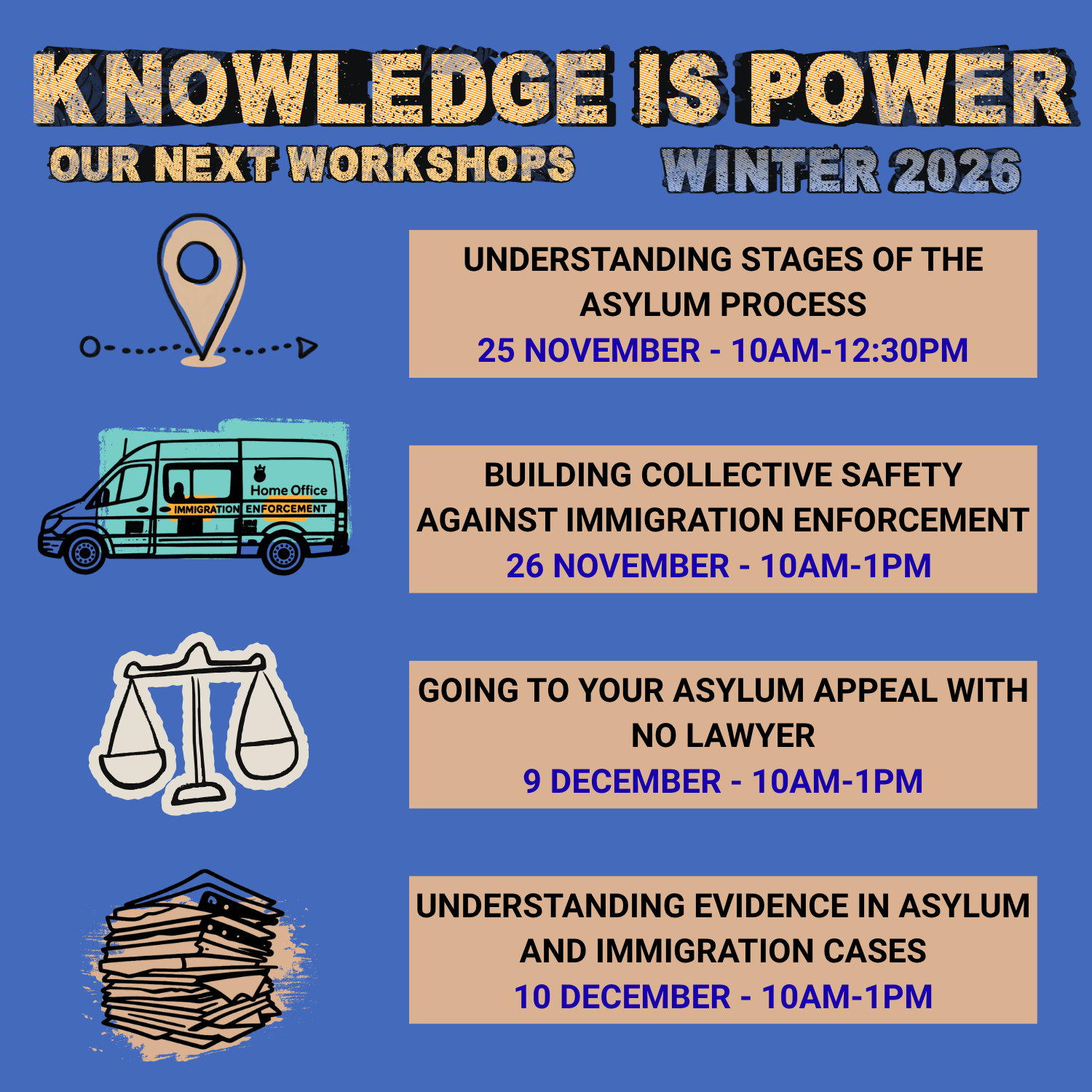
At Right to Remain, we regularly run our Knowledge is Power workshops, bringing the Toolkit to life through shared learning, listening, practical activities and conversations.
Our small but mighty public legal education team of two, Louise and Ally, have now tried, tested, reworked, pulled apart, put back together (and occasionally questioned everything!) our four core Knowledge is Power workshops, which we run every quarter.
These workshops are for everyone, whether you’re going through the immigration or asylum system yourself, supporting others through an organisation or community group, or helping people independently.
And just like the Right to Remain Toolkit, our workshops continue to grow and develop as we learn from the communities we work alongside. So even if you’ve joined us before, you are more than welcome to join us again.
Here’s a run down of our Knowledge is Power workshops:
Understanding the stages of the asylum process
The asylum process can be confusing and difficult to navigate, especially when the rules and guidance keep changing and people are unable to access legal advice.
In this workshop, we’ll build our knowledge and confidence to:
- Use the Right to Remain Toolkit for your own case and take practical steps together with others going through the immigration and asylum system.
- Understand what the law says about who can get protection in the UK.
- Understand the main steps in the asylum process, from asking the Home Office for protection to getting a decision, appealing a refusal and making a fresh claim.
- Give practical legal support to others without giving legal advice.
When is the next session? How can I join?
Wednesday 25 November, 10am-12:30pm, online
Building collective safety against immigration enforcement
Immigration enforcement is increasing across the UK, and the government is planning to expand immigration detention.
We encourage everyone to join this workshop, whether or not immigration enforcement is something you or your organisation have encountered directly.
Immigration enforcement reaches into everyday life, affecting people at different stages of the immigration and asylum process, as well as their families and wider communities. We all have a role in building collective safety, and we don’t need to wait until someone is at risk to start.
Together, we’ll explore ways to:
- Use the Right to Remain Toolkit to find information and take practical steps together.
- Understand how immigration enforcement works, what is changing and how it affects everyday life.
- Understand immigration detention, people’s rights and the harm it causes.
- Make safety plans from day one and think about what we can do together if someone is detained.
- Understand our rights and how to respond to reporting appointments, immigration raids and enforcement at home, at work and in public.
- Give practical legal support without giving legal advice, and build collective safety in our communities.
When is the next session? How can I join?
Thursday 26 November, 10am-1pm, Online
Going to your asylum appeal without a lawyer
More and more people are facing long waits for asylum appeals, often without a lawyer to help them. This workshop focuses on practical steps we can take to prepare for an appeal and support one another through that process.
In this workshop we will build our confidence and skills to:
- Use the Right to Remain Toolkit to prepare for an asylum appeal.
- Understand the main stages of an appeal, including deadlines and what happens at a hearing.
- Read Home Office refusal letters and understand the reasons for refusal.
- Prepare evidence, organise documents and get ready for an appeal hearing.
- Give practical legal support to others without giving legal advice
This workshop goes alongside Understanding evidence in immigration and asylum cases, but you can attend either workshop on its own.
When is the next session? How can I join?
Wednesday 9 December, 10am-1pm, online
Understanding evidence in asylum and immigration cases
Evidence can make a big difference to an immigration or asylum case, but knowing what to gather and how to use it can be confusing, especially without a lawyer. Preparing evidence early can help us understand our cases and take the practical steps required in our journey.
Together we will build our confidence to be able to:
- Understand what evidence is and how the Home Office and courts use it to make decisions.
- Recognise different types of evidence, including personal statements, documents, medical evidence and information about the country someone is from.
- Find, check and organise evidence, and understand what makes it useful.
- Understand what to do when evidence is missing or the Home Office does not believe someone’s account.
- Give practical legal support to others around gathering evidence and telling their stories, without giving legal advice.
This workshop goes alongside Going to your asylum appeal without a lawyer, but you can attend either workshop on its own.
When is the next session? How can I join?
Thursday 10 December, 10am-1pm, online
We say this often, but no one is coming to save us. We need to build our knowledge, develop our skills and strengthen our connections so we can support, protect and stand alongside one another.
We hope to see you there!
In solidarity,
From the people behind the Toolkit, Ally and Louise












Discussion: