
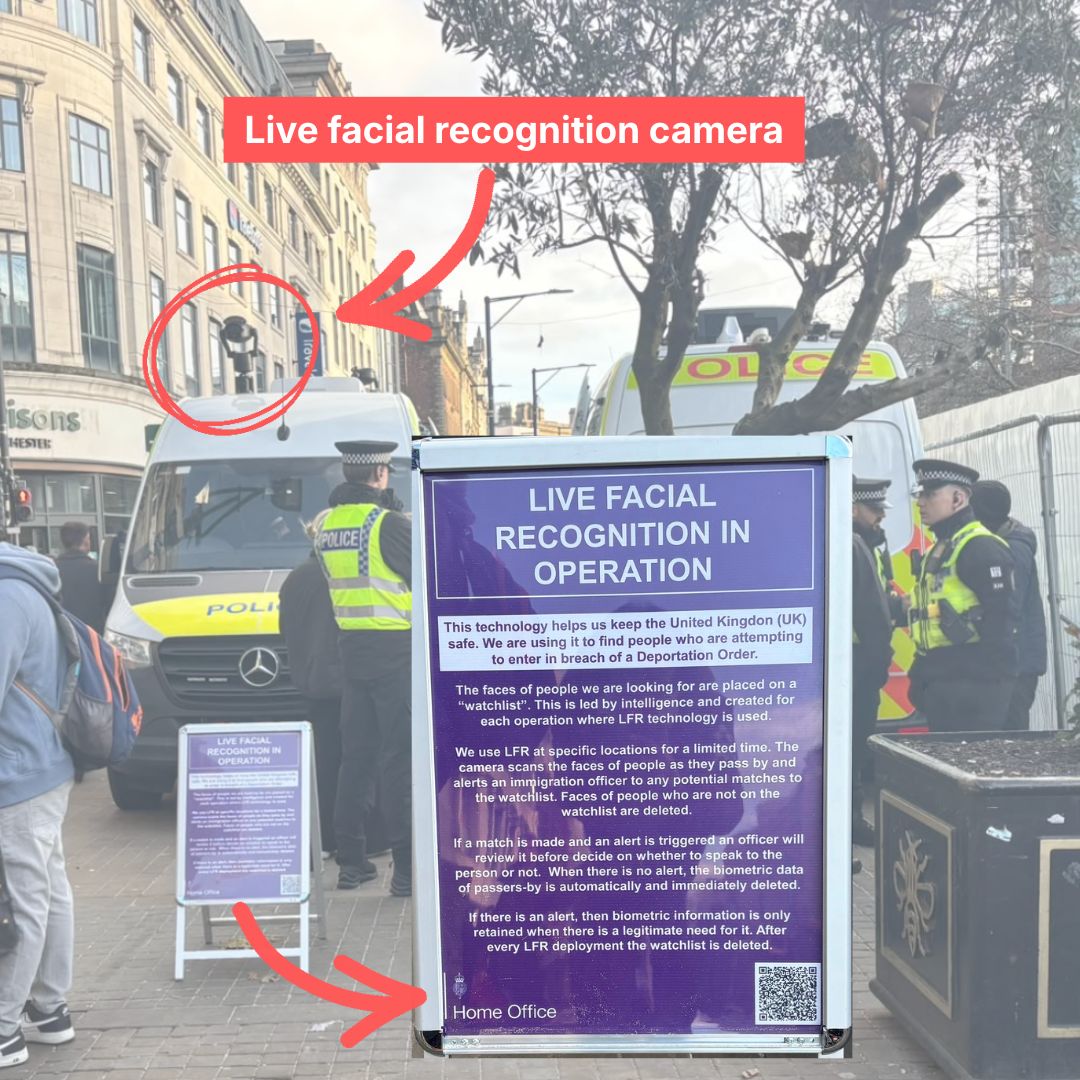
On Wednesday 25 and Thursday 26 November 2026, Immigration Enforcement and Greater Manchester Police carried out the first ever joint live facial recognition (LFR) operation in Piccadilly Gardens, Manchester city centre.
Right to Remain, Joint Council for the Welfare of Immigrants (JCWI), Migrant Justice Manchester and Liberty Investigates were present to monitor the operation, share information about people’s rights and intervene in stops.
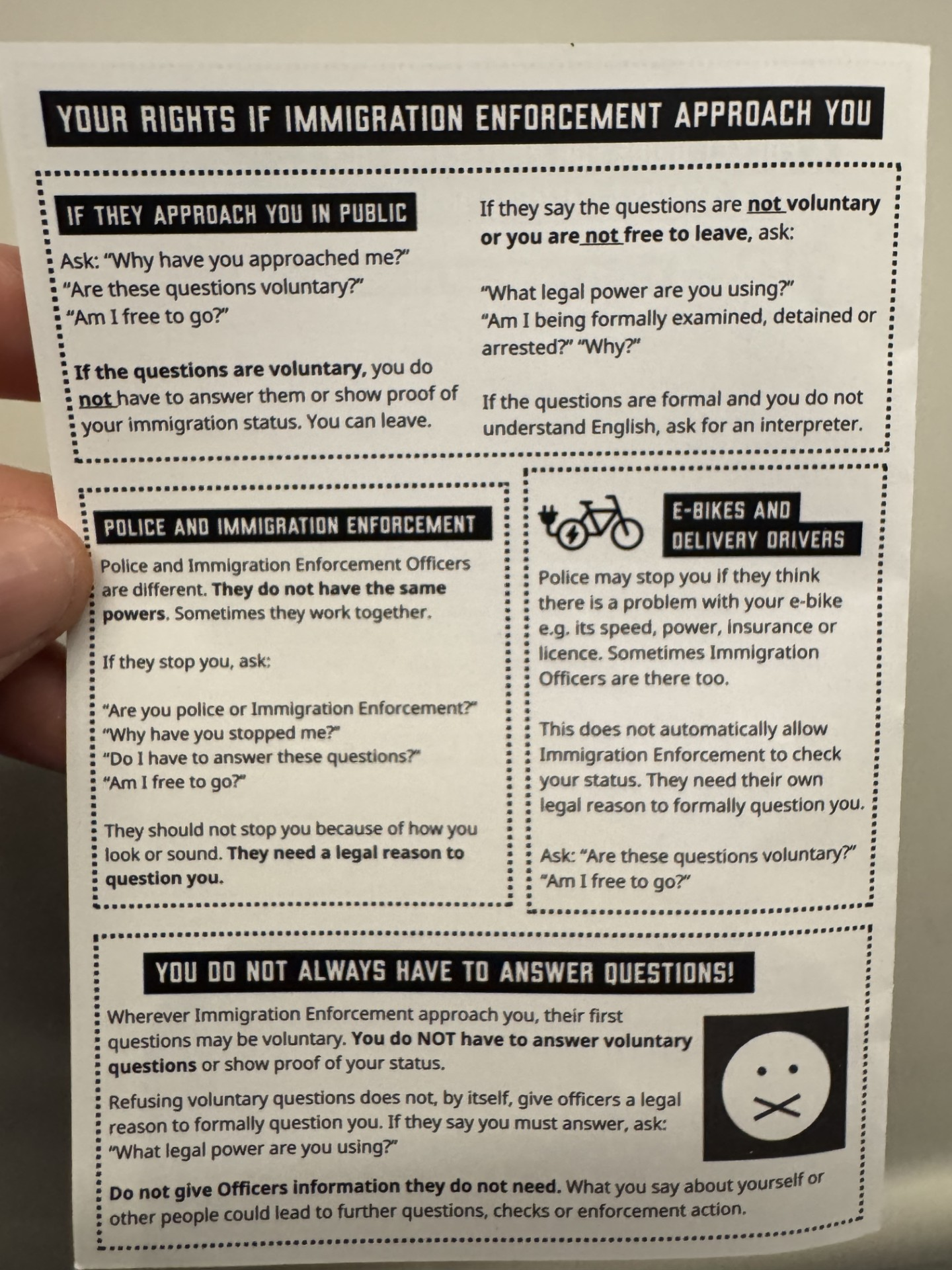
We distributed information on live facial recognition from Copwatch, how to challenge immigration stops from Anti-raids and our Pocket Guide for Protecting Our Communities Against Immigration Enforcement.
In this joint blog with JCWI, we share what we witnessed, what we learnt and how we can collectively prepare for and respond to future operations.
How have we got here?
At the beginning of November, Liberty Investigates published an article on the Home Office’s plans to expand the use of live facial recognition surveillance in immigration enforcement, including at transport hubs and public events. These plans followed a series of trials at Holyhead Port in North Wales between November 2025 and February 2026.
Live facial recognition surveillance has been used by police forces for several years, including to locate people wanted in connection with criminal offences. However, 25 November was the first time that LFR was officially used as part of immigration enforcement.
In its policy published on 18 November 2026, the Home Office claims that expanding the use of this technology will help “protect the public and reduce serious crime”.
What happened on the day?
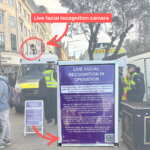
On the day, two police vans equipped with LFR cameras were stationed in Piccadilly Gardens.
If you’re not familiar with Manchester, Piccadilly Gardens is an especially busy area close to Piccadilly train station, surrounded by shops, major fast-food chains and public transport links. It is also frequented by food delivery riders, who have increasingly become a target of immigration enforcement. Spending much of their working day in public spaces and often relying on e-bikes makes delivery riders particularly visible to police and immigration officers. Given the well-documented practice of racial profiling in policing, delivery riders are particularly vulnerable to immigration enforcement, with police stops ostensibly carried out to check the legality of their e-bikes often turning into immigration checks.
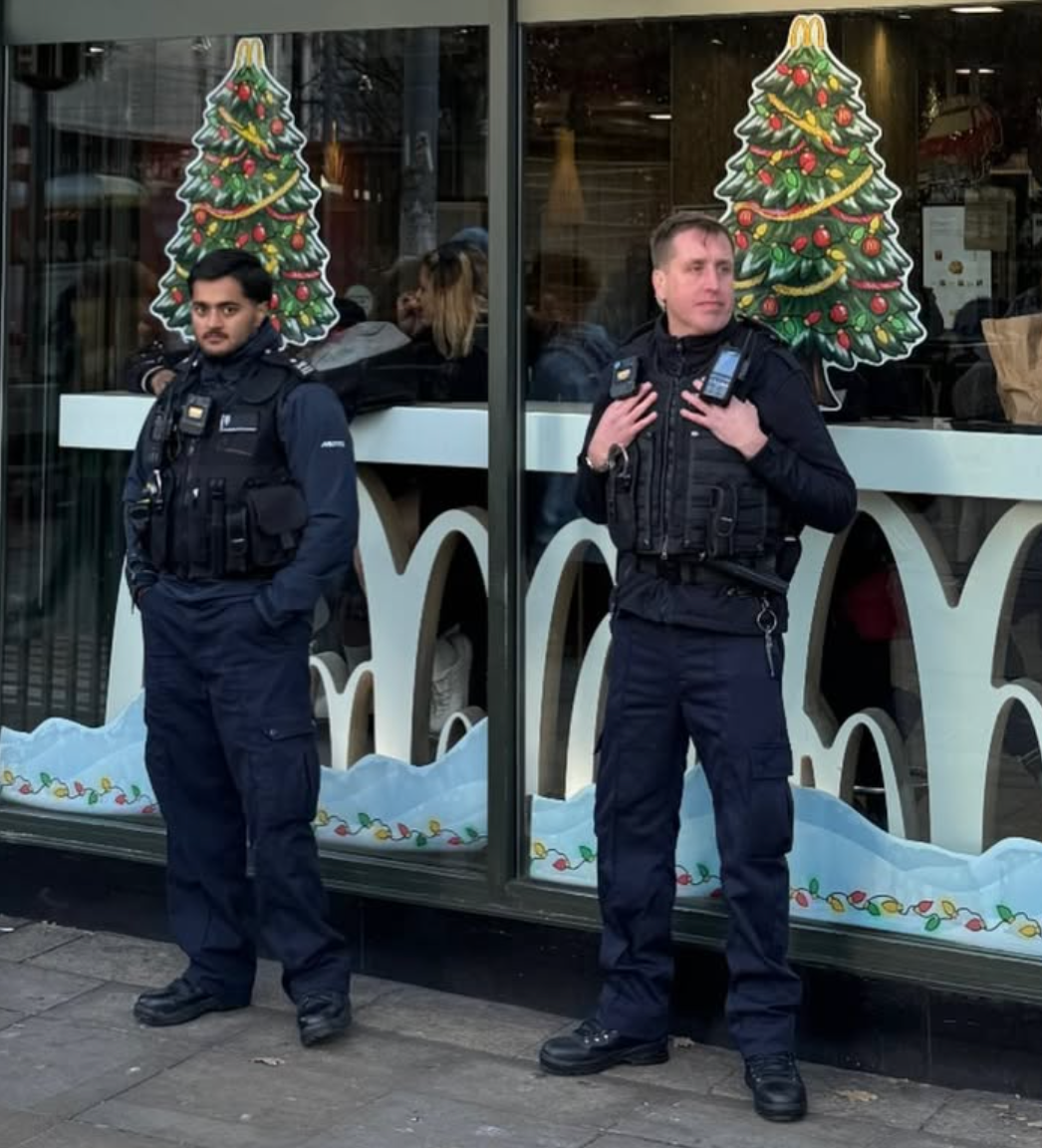
We counted around 10–15 police officers, including plainclothes officers, and around 8–10 immigration enforcement officers as part of the operation, loitering around the surveillance vans and further down the street.
Although police and immigration enforcement uniforms are marked differently, they look very similar. And remember, police and immigration officers have different legal powers!
The cameras scan the faces of people passing through the area and compare them with images of people on a ‘watchlist’. When a potential match is identified, an alert is generated.
We watched as officers received alerts and looked around the area for the person before approaching them. On one occasion, we saw officers initially stop the wrong person before stopping someone else wearing a similar black puffer jacket.
Despite the operation taking place in the middle of Manchester city centre, the Home Office signage stated that Immigration Enforcement was looking for people ‘attempting to enter the UK in breach of a deportation order’. Given that these operations can result in people being detained, separated from their families and removed from the UK, the lack of care taken over even the most basic information is shocking, albeit not remotely surprising to many of us.
Who was being stopped?
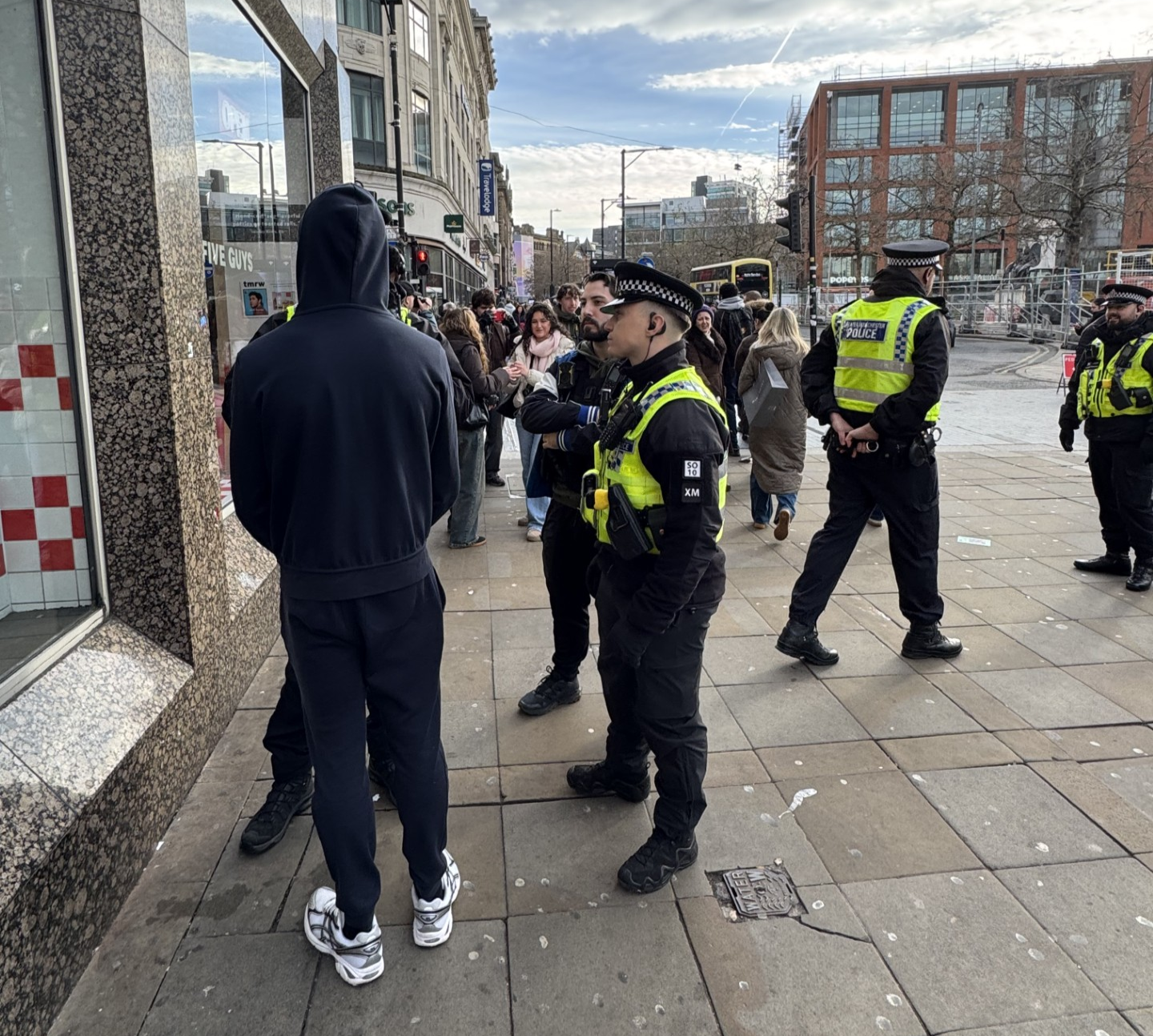
During the first day of the operation, we witnessed several police stops and unfortunately even arrests that we weren’t able to prevent – but no immigration arrests.
Some of our observations included:
- People being stopped in connection with existing bail or licence conditions, rather than being wanted in connection with a new criminal offence. None of them were even in breach of their conditions – but police were oppressively monitoring them.
- Police relying on what appeared to be incorrect or outdated information, including restrictions on where someone could go according to their individual bail conditions.
- Police using a mobile fingerprint scanner to establish someone’s identity.
- A young Black man being stopped after walking with his hood up and his face down on what was a particularly cold day. Police officers described his behaviour as suspicious and threatened him with arrest after he said “it’s fucking cold”.
- A man with limited English approaching police officers to ask for directions. Officers unlawfully asked for identification and checked his driving licence before giving him directions.
Throughout the day, we intervened in several stops, questioning the legal basis for officers’ actions, challenging discriminatory policing and offering information and support to people who were stopped.
How were people informed about the operation?
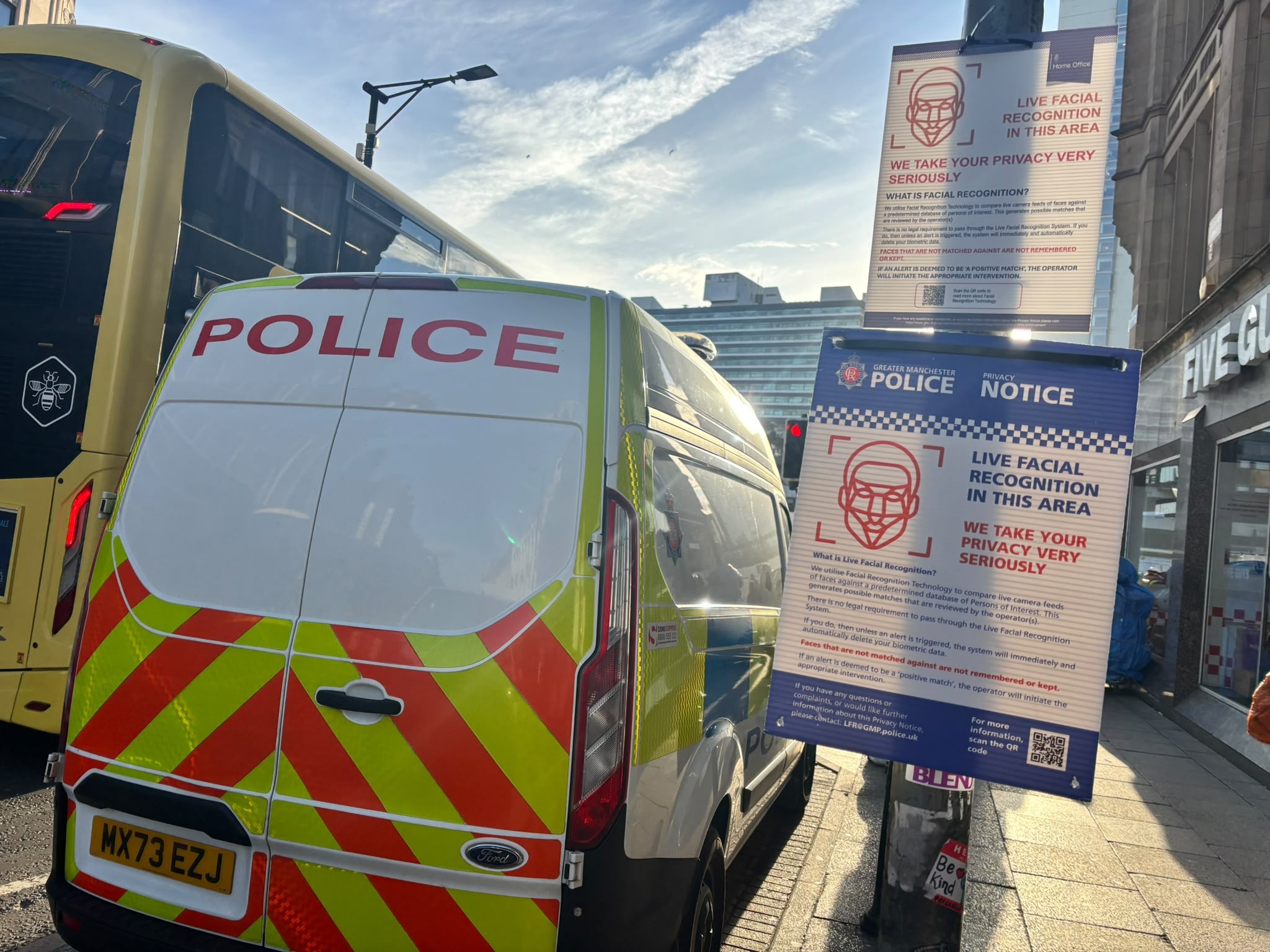
Ultimately, they weren’t. By the time anyone could see the cameras, they had already been scanned by the surveillance cameras without consent and checked against the watchlist.
We have been unable to establish the exact size of the ‘zone of recognition’ (the area surrounding the cameras within which people’s faces are scanned). Based on our observations of police and immigration enforcement’s actions on the day and where people were stopped, we estimated that this could extend to at least 50 metres from the vans.
The Home Office signage was positioned immediately next to the vans, meaning people’s faces could already have been scanned before they were close enough to read the information. The Home Office’s own guidance on conducting these operations identifies placing signs before the zone of recognition as one of the ways people should be informed that LFR is being used. The signage was only in English, and information leaflets (also in English) were not being actively distributed.
Meanwhile, police officers did not like us distributing information about people’s rights and aggressively got in our way and tried to prevent us. As usual, the authorities have no care for people’s rights and freedoms.


How we resisted it – and how you can protect yourself and your community
The expansion of live facial recognition into immigration enforcement is a further step in the criminalisation of migration and the normalisation of mass surveillance.
It enables the monitoring of our movements as we go about our everyday lives, undermining our right to privacy and potentially restricting our freedom to access public spaces, protest and organise.
While the technology itself does not give police or immigration officers additional legal powers, its use gives them huge power and creates further opportunities for racial profiling, questioning and enforcement. Read Liberty’s post on five reasons why facial recognition must be banned.
Here are some steps you can take to keep yourself and your community safe from increasing use of enforcement:
- Keep up to date. Follow local anti-raids groups or your local migrant justice or police monitoring group (like Copwatch). In theory, the Home Office should, where possible, give at least five days’ notice of planned operations, but they often won’t (subscribe for updates on its Live Facial Recognition in Immigration Enforcement page)
- Spread the word and warn others. Share alerts and information about upcoming operations across your communities, particularly with people who may face language or digital barriers. We understand you can raise complaints and concerns via this UK Gov page.
- Know your rights and how to stay safe. Masking isn’t enough for face recognition cameras (unless you cover your full face), but you can avoid an area where facial recognition is being used. Read Liberty’s guide to understand your rights and the limits of police powers.
- Share legal knowledge. Use Right to Remain’s Key Guide on Immigration Enforcement and distribute Right to Remain’s Pocket Guide and Anti-raids flyers (English and multiple languages).
- Organise collectively. Connect with local anti-raids groups, migrant justice organisations and police monitoring groups to monitor operations, support people who are stopped and challenge unlawful or discriminatory practices.










Discussion: