
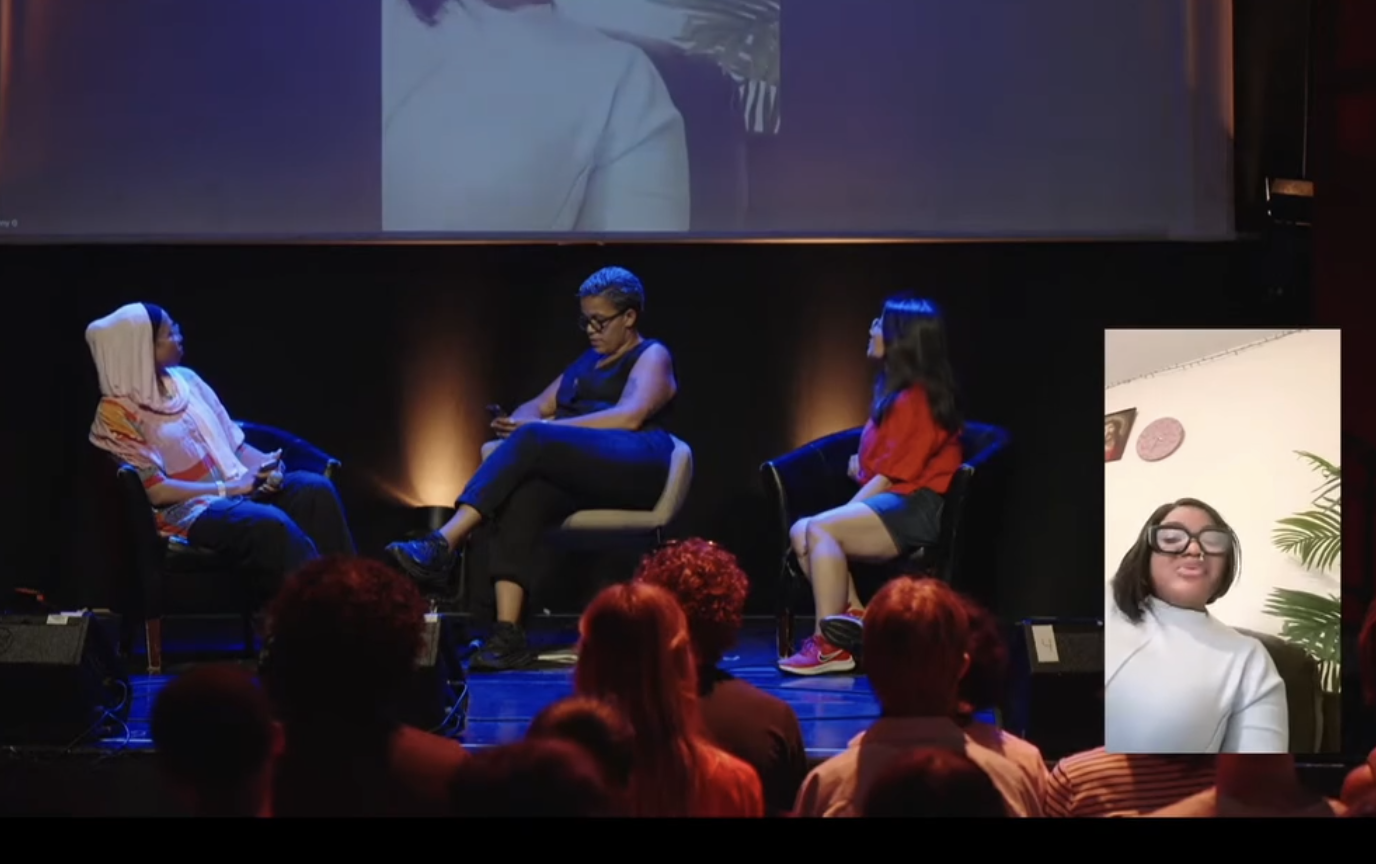
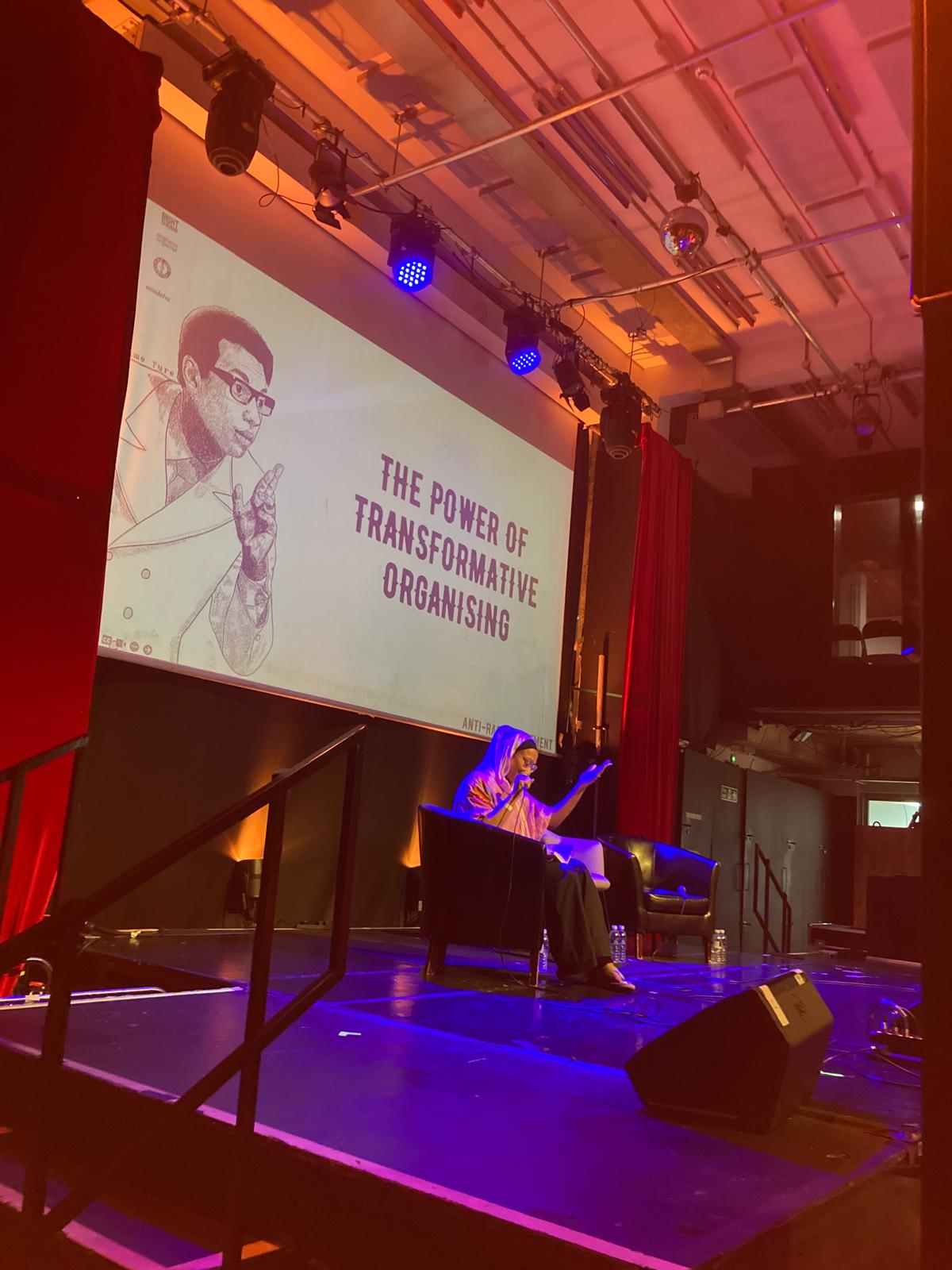
Following the official launch in November last year, ARM (Anti-Racist Movement) hosted a national event, ‘The Power of Transformative Organising’, in London on 11 July. Right to Remain is one of the core founding members of ARM, alongside BLMUK, Maslaha and Migrants Organise.
ARM is building a racially democratic, multicultural society free from racial and all other oppression and exploitation, where everyone can fulfil their potential and live freely and with dignity within their multiple identities without fear. We will win by developing a movement that defends migrants and creates conditions for racial and economic justice for all by relief, repair and restructure. Over the last few months, people have been forming local groups to start organising together, which has been an exciting development.
ARM’s movement philosophy is based on relief (building trust through mutual aid), repair (creating solidarity through taking action together) and restructure (transforming power in society towards dignity). This aligns perfectly with Right to Remain’s Theory of Change: building knowledge through public legal education and mutual aid in our community, building radical solidarity through strategic convening and coordinated action and building power through lived-experience-led campaigning and organising.
The national event on 11 July was designed to go deeper into the ideas of relief, repair and restructure – to think through what they could look like. Before practical workshops, we arranged a panel discussion. And it was such an honour for Right to Remain to share the same stage with Anaka Collective in Belfast, who played a major role in providing and coordinating an emergency response when racist attacks swept through the city of Belfast in June.
Representing Anaka Collective, Kenny gave an account of how Anaka Collective’s years of ‘unglamorous work’ of organising – meeting regularly, sharing meals, helping each other, connecting with other local groups and neighbours – enabled them to meet the moment when an eruption of racial violence devastated the community. They quickly organised themselves and others to rescue people affected by the violence, with a whole community united by solidarity offering others places to stay, clothes to wear and food to share, when no help from the state appeared. In Kenny’s words, ‘We were not waiting for official permission to do something. We just moved.’ Reflecting on the years of organising which led to this moment, Kenny said that the biggest learning from this experience was ‘Boring work saves lives.’ We highly recommend watching Kenny’s full speech here.


Right to Remain also does ‘boring work’. We are fully aware that when we say we do public legal education, some people switch off because it does not sound heroic enough. We are pretty certain some people also find that understanding the legal system is tedious, compared to, say attending a demonstration. But for our community of migrants, refugees, and people seeking asylum, our lives depend on it. The reality is this: legal complexity and opacity are often weaponised against us to punish us. Safety eludes us and our life chances are diminished because of the hostile legal system. We can think of no other country in the world that introduces, almost every year, a new, more restrictive immigration and asylum law, adding a further layer of complexity to an already Kafkaesque system. How are we supposed to navigate such a legal labyrinth when there are simply not enough lawyers available and when we are broken by sheer despair?
This is why, at Right to Remain, we are committed to democratising knowledge and promoting safe legal support based on solidarity (which does not stray into legal advice). We know that public legal education shifts power. We help our community of migrants, refugees, and people seeking asylum and their allies to gain control over our own lives – because we know no one is coming to save us. This relief work is the foundation of mutual aid practice which can build trust, bonds and relationships. For us, this is how organising happens that has a real impact on individuals’ lives and prepares us to fight the system together.
Every day, collectively, we are building shared knowledge of, for example, what to do if the Home Office refuses your asylum claim or what to expect if you are at risk of detention. None of these situations is easy to face, which is why trust and relationships are crucial. These human bonds push against the system that tries to turn everyone into ‘cases’, the system that intentionally isolates people from each other and makes them feel powerless. Organising through public legal education enables our community to come together to fight for our right to remain from day one, way before an emergency of immigration raids, detention, or deportation happens.
In our imagination, it is often ‘experts’ and ‘saviours’ who will intervene in an emergency to save the day. Through organising, we can begin to build a system that uplifts everyone and makes the entire community strong enough to push against emergencies in the first place. Right to Remain will continue our work of building communities and places of justice, solidarity, and power. And we look forward to continuing to work with ARM.
Eiri Ohtani, Director








Discussion: