

We previously wrote about the public inquiries into the proposed expansion of Campsfield and Haslar Immigration Removal Centres. To recap: the Home Office plans to create around 1,000 additional detention spaces, expanding the UK’s detention estate by approximately 40%.
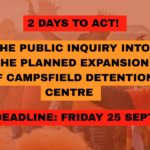
The Campsfield public inquiry was due to begin on 6 October 2026, but has been postponed following an application by the Coalition to Close Campsfield’s solicitors, Reed Smith, challenging the withholding and redaction of key documents. The Coalition argued that without this information, it could not properly scrutinise the Home Office’s case or participate fairly in the inquiry. A new inquiry date has yet to be announced. The Haslar public inquiry is due to begin on 17 November 2026.
Right to Remain will be speaking at the Campsfield inquiry!
Right to Remain has registered as an Interested Party in the Campsfield inquiry, allowing us to submit evidence and speak at the inquiry. The Coalition to Close Campsfield will be intervening as a Rule 13 participant, represented by their legal team. We explain more about what these roles are and what happens at a public inquiry in our blog.
Our submission brings together Home Office statistics, clinical and academic research, lived experience, and evidence from legal professionals, social workers, healthcare practitioners and organisations working across immigration, housing, education, safeguarding and community support. Thank you to everyone who responded to our calls for evidence!
We are responding to two key issues identified by the Planning Inspector:
- Whether the Home Office has demonstrated a need to increase detention capacity at Campsfield.
- The impact of the expansion on people held in detention, including their mental health, humanitarian harms and human rights.
We are finalising our statement and are now inviting organisations to endorse our arguments opposing the expansion.
1. The Home Office has not demonstrated a need for more detention capacity
Home Office figures show that 51% of people leaving immigration detention in the year ending June 2026 were released on bail, rather than removed from the UK. Release on bail has been the most common reason for leaving detention since 2015. Home Office statistics also show that while workplace immigration enforcement visits and arrests increased in early 2026, the number of people detained following these visits actually fell compared with the same period in 2025.
Following the independent Shaw reviews, the government reduced detention capacity, closing Campsfield in 2018. Yet it now proposes permanent expansion despite rapidly changing immigration policies, including the recent end of the UK-France ‘one in, one out’ pilot. Our evidence includes cases where decisions to remove people detained under this scheme were subsequently withdrawn following legal challenges.
2. Expanding detention will cause serious harm to people and communities
Most importantly, we have the real voices of people who have been affected by detention. In addition, we have included extensive clinical evidence demonstrating the serious psychological harm caused by detention, including PTSD, depression and retraumatisation. Our submission includes evidence from a clinician who completed over 50 medico-legal reports, mostly involving people detained at Campsfield, alongside recent comprehensive research and independent reports highlighting failures in safeguarding.
Evidence from social workers, healthcare professionals, university staff, housing networks and community organisations shows how detention and immigration enforcement disrupt every aspect of people’s lives. This includes age-disputed children detained alongside adults, young people losing education and accommodation, families separated, and people cut off from essential care, relationships and support.
The harm of detention often has lasting consequences, affecting people’s ability to study, work, participate in their communities and rebuild their lives. Families, charities and public services are left dealing with the consequences, often long after someone is released.
If the government insists on maintaining immigration controls, detention is not inevitable. Evidence from community-based alternatives shows that more humane, less costly approaches are possible, allowing people to engage with their immigration cases without being detained.
Will your group or organisation endorse our statement?
We are inviting groups and organisations from across the UK to endorse the two key arguments outlined above: that the Home Office has not demonstrated a need for more detention spaces, and that expanding detention will cause serious harm to people and communities.
You can endorse our arguments based on the summary in this blog, or ask to read our full statement before making a decision.
You do not need to submit your own evidence or formally participate in the inquiry to show your support.
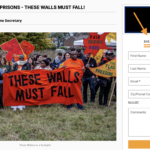
Sign our petition to stop expansion!
We don’t often launch petitions, but the scale of this expansion and the lack of attention it has received mean we want to give more people a way to speak up and make their opposition heard. We explain more about why we are launching the petition in this blog and how you can get leaflets to spread the word.











Discussion: