In February, Right to Remain hosted two Annual Gatherings, the first in Birmingham, and then in Leeds. The aim of these events was to bring together local groups and organisations to build radical solidarity, strengthen relationships and learn from each other. We always say: knowledge is power, because it gives us a way to reduce harm, fear and isolation created by an oppressive and hostile immigration system. We see each other’s struggles and recognise it is the system that is harming us. It’s a way for us to identify patterns, take action, challenge the government narrative and organise together. These events are a space for communities to connect, learn together and build power, a critical part of sustaining our migration justice movement.
Importantly, we co-hosted and facilitated the events with our These Walls Must Fall (TWMF) campaigners. Their lived experience of the sharp end of the government’s cruel and punishing policies, shaped how we ran the sessions, including holding space for them to share their own experiences and perceptions of what is needed to challenge the system we work within- which lead us to collective action.
We began the day by inviting participants to connect with each other and share a recent win, big or small. We often open our sessions in this way because working within the realities of the hostile environment is exhausting. It is easy to feel swallowed by the scale of the challenges we are facing. Taking a moment to name the wins, whether that’s a positive asylum decision or a simple act of solidarity, helps to shift the focus and make the fight for migration justice feel possible.
Photo credit: Adam Yosef
Next, we moved straight into a panel discussion, inviting our TWMF campaigners to share their experience of the hostile environment. Their testimonies were raw and deeply emotional accounts of the violence of the system, and how it seeps into every corner of daily life – from the constant fear of detention and deportation, to the psychological toll of living under the uncertainty of ever shifting policies that affect status, security and family life. We are so grateful to our campaigners for not shrinking away and letting us hear their stories.
For the knowledge building part of the session, we focussed on enforcement, detention and reporting. As an organisation, we have been focussing our energy on developing workshops and growing our resources around this topic, amidst a detention estate that is growing, and a sharp increase in raids, removals and general enforcement tactics since the Labour Government took office in July 2024 In addition to a sharp increase in immigration enforcement, Labour’s plans to reduce grants of leave and increase routes to settlement, means that more and more people will be subject to enforcement control, state violence and instability.
Building knowledge and understanding of enforcement and the risks it imposes is paramount; it is something often unspoken about, with people not understanding the danger until it is too late. Similarly, building tangible solidarity and trust in our everyday work prepares us to act quickly with the connections around us if/when we are needed to. We draw on our direct experience to convey this; our Free Fatou campaign, where we stopped the deportation of one of our TWMF members on three occasions before advocating for her release back into the community. The reason we were able to do so was due to the knowledge gained through our public legal education work and built around the tactics used by the Home Office to detain and deport, and the network of community we had grown – both of which were for Fatou’s campaign.
Throughout the days, we emphasised the importance in Public Legal Education; When you’re navigating the immigration system – whether it’s your own case or someone else’s – staying informed and understanding what’s happening is essential. Knowledge is power, but it’s also an act of care and protection. It can be the difference between feeling overwhelmed and feeling able to respond, plan, and challenge decisions with more confidence.At the end of the presentation, participants were asked to think: What kind of knowledge can protect people? What do you need to go away and learn more about now? And we were clear that knowledge alone isn’t enough. It has to sit alongside connection: building relationships, strengthening trust, and knowing we can rely on each other.
After lunch, (always catered by Al Badr when in Birmingham!) we moved into our second panel of the day; How do we build solidarity and power amidst the far right? In Birmingham, we were joined by our TWMF campaigner Ven and George Tinker from the BIRCH Network. In Leeds, we had Ven, and Rachael Smith from the No to Hassockfield campaign and Refugee Futures, and Dr Jo Armitage, a lecturer at the University of Leeds and fellow of the Berkman Klein Center for Internet & Society. We heard from panelists how the rise in the far-right – on the streets, in the media and in our political structure – has been affecting them and the people they work in solidarity with every day. They described an increase in flags, abuse in the street, and the spreading of misinformation. However there was also a clear thread of hope: communities stepping up to counter this hatred in meaningful and sometimes surprising ways.
Right to Remain have run hundreds of in-person events throughout the years. Towards the afternoon, energy can lag, so this year, we trialled a new exercise to keep momentum: Battle of Ideas! We split attendees into teams, and asked them: What’s the best way to build solidarity and power amidst the far right attacks together? Groups had to come up with a practical action, something tangible and realistic. Following a vote, the action with the most points wins, and the team members receive a unique prize! Competitive spirit ensued, as groups discussed options – what strengths can we rely on that we already have? Where could the threat come from? What opportunities can we identify to create something lasting?
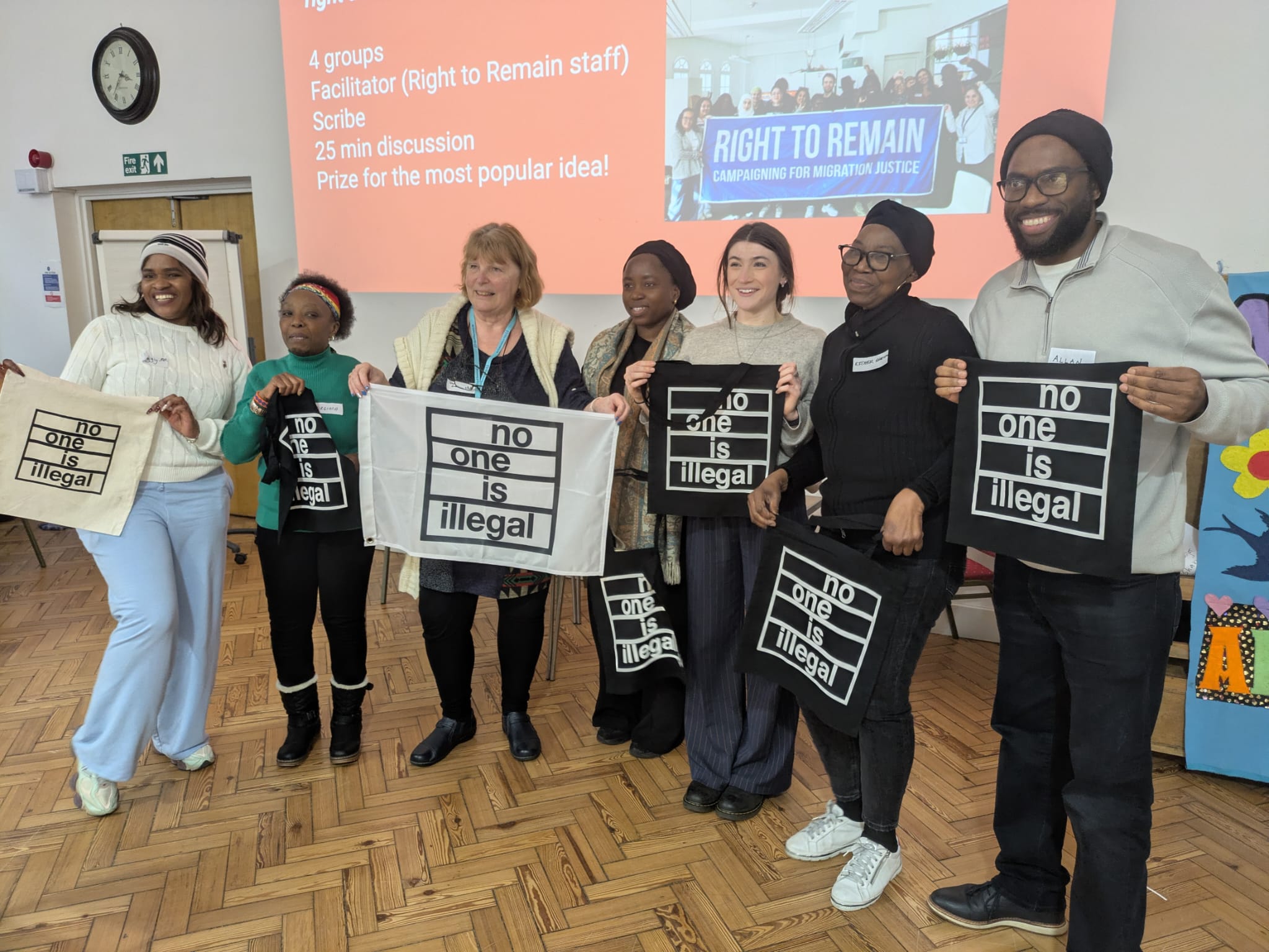
Battle of Ideas winners at the Birmingham Annual Gathering
Themes that emerged from all groups included mobilising local and grassroots community, tapping into existing resources, playing to our strengths, incorporating food, music, and identity to the events, and creating something that can be sustained, or repeated: one off events do not create relationships, the foundation of community power. Well done to the winning teams – and thank you for your rousing acceptance speeches when collecting your prizes!
We closed the day by sharing our three key messages:
Stay informed. The situation is changing, people will be disengaging from the system – how do they know? You are the people who have their trust – you need to stay informed too.
We do this together. Coordinated response is necessary at a local level.
Build a bigger tent. We need to mainstream migration and asylum as part of a broader social justice issue, something that the entire community owns. We cannot do it alone.
Thank you to everyone who joined us for these events; they reinforced us as a community, and energised us to continue fighting. We want to share a piece of our favourite feedback from a Birmingham participant:
“Thanks for your efforts, and it’s really admirable to see how everyone in this community is standing together supporting and listening to us. English might not be my mother language, but I’m quite sure this is exactly the definition of Solidarity.“
Sign up to get our newsletter, and you can choose to receive our standard newsletter and/or our legal newsletter, which has our latest legal updates blog posts and any changes to the online version of the Right to Remain Toolkit.







Discussion: