
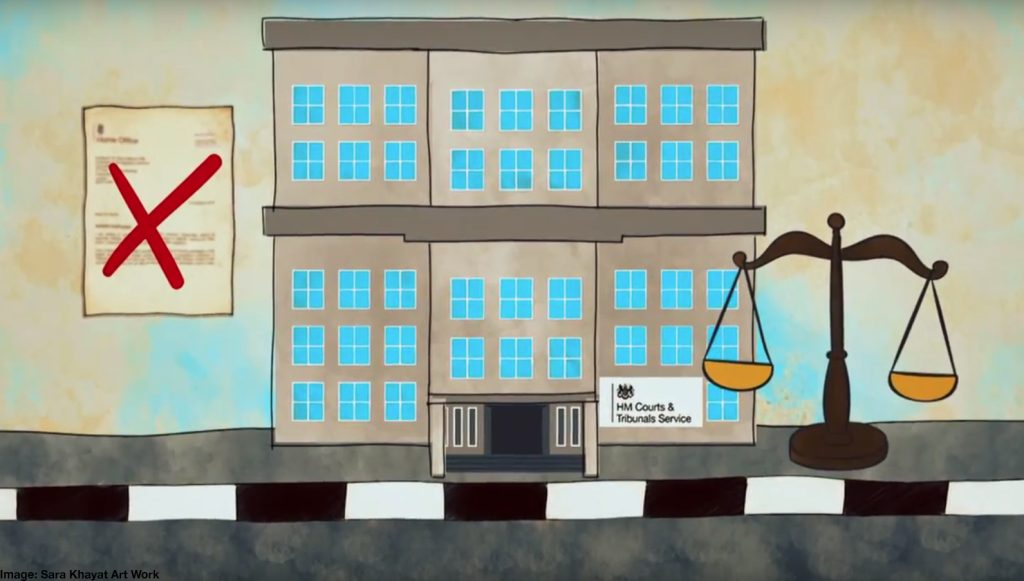
Receiving a Home Office refusal of your asylum application is often very upsetting and confusing. If you have a right of appeal, you usually only have 14 days to submit it. Things move fast, often at exactly the moment you feel least able to deal with paperwork.
With fewer people able to access legal help, many are forced to prepare an appeal alone. Some people have never had a lawyer at all while others lose their lawyer at appeal stage or can’t find anyone to take the case on in time. We also know from our community that many people have had to go to the First-tier Tribunal without any legal representation.
We’ve updated our Toolkit pages to take you through the basics of asylum appeals step-by-step. For example, how to submit your appeal, what documents you may need, how to start building your case, and what to expect on the day of the hearing.
The Toolkit is a huge resource, so in this blog we will also highlight a few other key sections that can help you prepare for your appeal if you don’t have legal representation.
If you’re supporting someone, there are lots of practical things you can do together like helping them read through the Toolkit resources, plan next steps, gather and organise documents, do basic research, provide supporting letters, arrange travel, accompany them on the day… The list is long!
And even if someone does have a legal representative, it is still important to understand the process and know what to expect at tribunal.
If you have an appeal and you’re feeling anxious about what to do, maybe ask a friend or trusted person to read through these pages with you. You don’t have to do this alone.
Toolkit page: Prepare for your appeal hearing
Our newly revised page includes:
- What to do after a refusal: identify if you have a right of appeal, tips on how to read your refusal letter and understand why you were refused.
- How to submit your appeal: different ways to submit your appeal, a step-by-step guide to lodging your appeal using the online Tribunal system.
- Tribunal fees: when you do not need to pay and how to get help with costs.
- How to build your case yourself: what kinds of documents/evidence can help, and how to organise and present them clearly for the Tribunal and writing your AEC (Appellant’s Explanation of Case)
- How to follow tribunal instructions: what to expect after you lodge the appeal, including how to deal with deadlines and paperwork.
- Practical hearing issues: interpreters, postponements, privacy/anonymity requests, requesting a female/male judge, accessibility adjustments, and asking for a remote (CVP) hearing.
Toolkit page: Your appeal hearing
This page is specifically about the day of the hearing itself. You can find information on:
- What to expect on the day: a walkthrough of what happens when you arrive at the Tribunal, what the hearing is actually like e.g. who will be in the room, how it usually runs and what to do if things don’t go as planned.
- Practical preparation (in-person + CVP): simple, practical actions to help you get ready e.g. planning travel and arrival, bringing/organising documents, and tips for setting up and taking part in remote (CVP) hearings
- Communicating during the hearing / making your argument: suggestions on how to set out your points clearly and how to respond to questions.
- Outcomes: what to expect after your hearing.
Other useful resources in the Toolkit:
There are other sections within the Toolkit that can also be particularly helpful if you are preparing for an appeal without a legal representative. These include:
- How to make a Subject Access Request: A Subject Access Request (SAR) is a request you make to get your personal information from an organisation. Making a SAR can be a good first step to collect information and documents before a new application, appeal, or other legal step. A SAR lets you ask what information they hold about you, how they use it, and who they share it with. You can read more about how to make a SAR here.
- Practical guidance on how to write a Witness Statement: A witness statement is your chance to explain important facts in your own words. It can be used as part of an asylum or immigration application to the Home Office or an appeal. It becomes part of your evidence. Read more about writing your witness statement here.
- Supporting letters: how supporters can write stronger letters that can help your case. Learn about this here.
If you have been refused by the First-tier Tribunal and are looking for information about what happens next and appealing to the Upper Tribunal, you may find it helpful to read our Toolkit page on appealing to the Upper Tribunal. This page includes:
- What the Upper Tribunal is and how it’s different from the First-tier Tribunal
- Whether you have a legal basis to challenge the decision (“error of law”)
- Permission to appeal: how to apply first to the First-tier Tribunal, then (if needed) to the Upper Tribunal and what happens if refused/granted
- How to build your grounds of appeal: where to find relevant law/case law, and tips for writing clear reasons
- What happens next: practical needs/privacy/fairness, what the hearing is like, and what the decision can mean
We are planning to run a Knowledge is Power: Going to your appeal without a lawyer in March 2026 and will announce information over the coming weeks. Sign up the our newsletter here.













Discussion: