
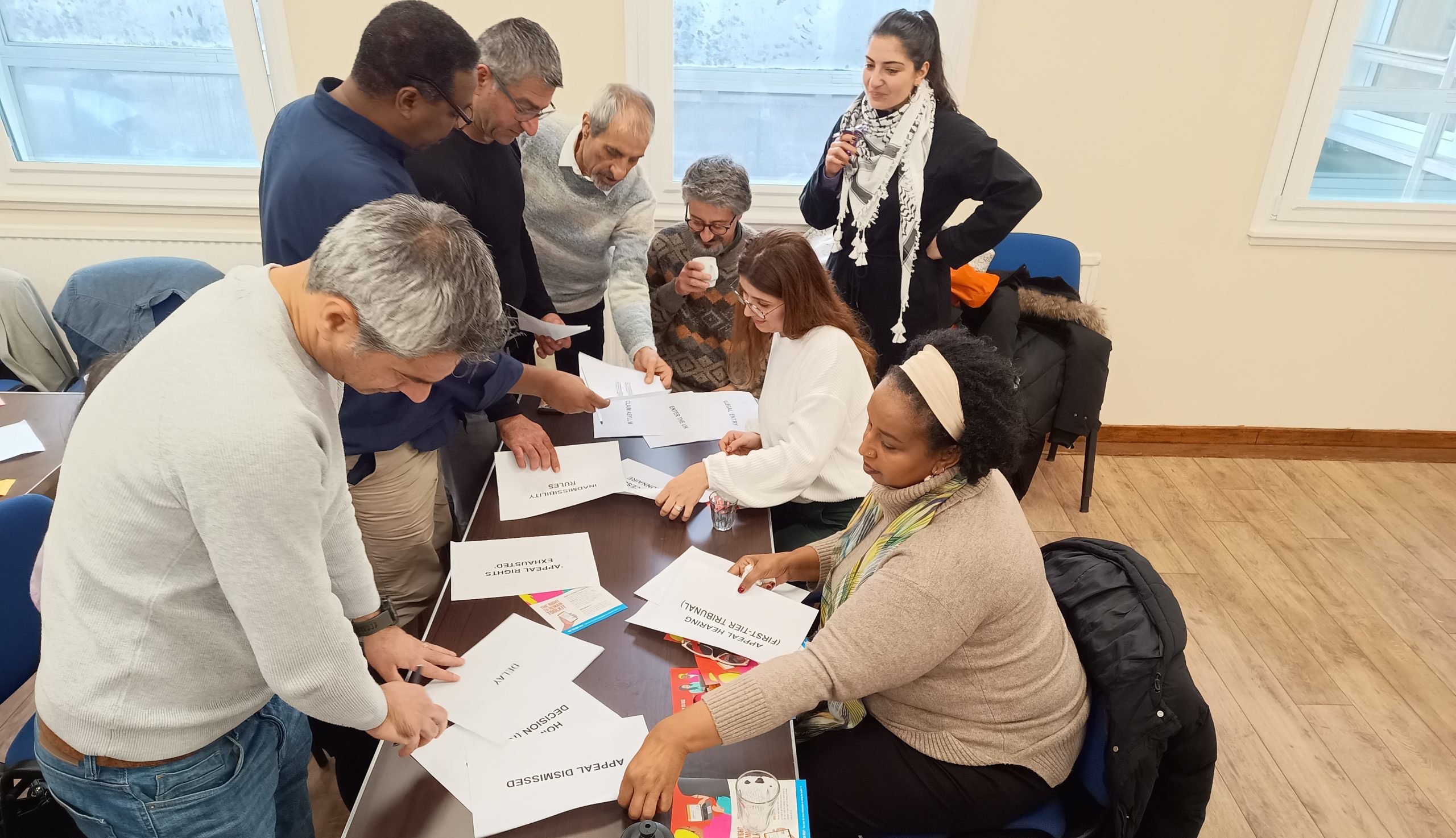
This short blog (re)introduces our current workshop offering. Keep reading to find out out how to request a workshop from Right to Remain.
What is public legal education?
Our public legal education involves producing accessible resources and workshops, so that people can understand and navigate the UK’s asylum and immigration system.
Our best known resource is the Right to Remain Toolkit – a guide to the asylum and immigration system, with practical steps you can take to be in a better position. We also have the Young Asylum Guide – a guide specifically for unaccompanied asylum seeking children, and the Asylum Navigation Board – a visual guide of the adult asylum process.
We also regularly update our Legal Updates blog, where we cover key news in a short and accessible format.
How do workshops fit in?
The Right to Remain Toolkit is a living resource, and one of the main ways it comes alive is through legal education workshops.
Workshops are one of the key ways in which we engage with our community of Toolkit users. When it comes to gaining confidence with a specific topic, this is best done by coming together and working with others. Our workshops are also a space for building connections and radical solidarity amongst participants.
We currently have workshops on the following topics listed below. Please note that we might be able to run a combination of topics in any given workshop, just ask!
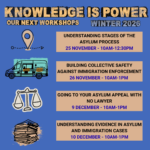
We run Knowledge is Power Sessions regularly on the Asylum Process, Going to an asylum appeal without a lawyer and Detention and Enforcement. Please check our Events page to see when the next session is!
How to effectively and confidently navigate the Toolkit
- Introduction to Right to Remain and our Theory of Change
- 5 tips for sharing the Toolkit
- Build confidence in using the Toolkit
- Interactive exercise on how to use the Toolkit
The stages of the asylum process
- Detailed walk through of all stages of the asylum process, incorporating latest law and policy, and practical steps you can take at each step of the process
- Interactive exercise to get to grips with the stages of the asylum process
Going to your asylum appeal without a lawyer
- What an appeal is and what the Tribunal actually decides
- What happens after an appeal is submitted
- How to read and respond to your Home Office refusal letter
- How to start researching and organising evidence
- What a hearing looks like in practice and how to prepare
Understanding the difference between legal advice and legal support
- Definitions and current context
- Interactive exercises involving case studies
- How to identify when legal advice is needed
- Tips on how to offer legal support with clarity and care
Preparing for a substantive interview
- Deep dive into substantive interview Toolkit page
- Interactive exercises to help prepare
Immigration detention and enforcement
- Understanding UK immigration enforcement
- What immigration detention is and how it affects people
- Practical tools to prepare for detention
- Responding to enforcement on the ground (reporting and raids)
- Strengthening collective skills for solidarity and protection
Evidence
- Key definitions: what is evidence and when might you need it? What is good evidence?
- Interactive exercise assessing quality of evidence
- How to gather evidence with your community or when working with your lawyer
Working with a lawyer
- Key definitions
- Challenges with Legal Aid
- Interactive exercises: what should a lawyer do for you? How can you help your lawyer?
Solidarity Sessions
Another form of workshop we run is Solidarity Sessions. The idea for these types of workshops came from a realisation that we needed to build a space where groups from all types of organisation, role or background could come together, connect, learn, brainstorm, and ultimately, step up to the challenges proposed by the even more hostile environment.
At the same time, internally Right to Remain was working through our refreshed Theory of Change, which combines building knowledge (public legal education), building radical solidarity (strategic convening) and building power (campaign and community organising). Solidarity Sessions therefore are a way to put our Theory of Change into practise.
There is no criteria for a Solidarity Session, the only thing we require is at least 4 different groups in the area to come together and express their interest.
Please get in touch if you’d like more information about any of these workshops.
Please note that we currently only have one Legal Education Officer who balance delivering workshops with maintaining our resources, so we may not be able to respond to your individual workshop request. Also for this reason, we tend to prioritise areas where multiple groups can come together for one workshop.
If your organisation would like to request a Right to Remain staff member as a speaker or panellist for your event, please email esther@righttoremain.org.uk with as much information as possible (for example, where you are, topics you would like to focus on, type of audience, how many attendees approximately, etc).









Hi,
I am an occupational therapist working within the Salford NHS early intervention for psychosis team. We have a few service users with immigration/asylum issues and as team we would like to learn more to allow us to support them.
Can I request more information re the training you offer, such as pricing or whether this is available for free to the NHS?
what the training entails/access to this etc
Thank you in advance
Please request a workshop here: https://righttoremain.org.uk/how-to-request-a-workshop-from-right-to-remain-and-why-we-ask-some-organisations-to-pay/